
Marketing wants a recruiting video. The person who owns export compliance hears the word camera and says no.
Both are right, which is why this needs a plan instead of a debate.
The short answer is yes, you can film in an ITAR facility. Not everywhere, not everything, and not without sign off. This is not legal advice. Your empowered official, with your export counsel if you have one, makes the final call on every frame.
What the rule actually says
Start with the definition. Under 22 CFR 120.33, technical data includes information in the form of "blueprints, drawings, photographs, plans, instructions, or documentation." A clear shot of a fixture, a setup sheet or a part on the bench can be technical data.
The same section carves something out. It excludes "basic marketing information on function or purpose or general system descriptions of defense articles." That is the room a video has to live in. What a part does, yes. How you make it, no.
Then there is who sees it. Under 22 CFR 120.56, technical data is released through "visual or other inspection by foreign persons of a defense article that reveals technical data." Under 120.50, releasing technical data to a foreign person inside the United States is a deemed export. So the risk is not only the camera. It is whoever holds it and whoever edits.
Posting it does not make it public, either. Under 120.34, a public release counts as public domain only "after approval by the cognizant U.S. Government department or agency."
Commerce controlled items have their own version. The Export Administration Regulations define technology to include photographs and "information revealed through visual inspection."
Why this is worth an afternoon of planning
The civil penalty can reach $1,271,078 per violation, or twice the value of the transaction, whichever is greater. That is the 2025 figure, and OMB skipped the 2026 inflation adjustment, so it still stands.
It gets enforced. In February 2024 Boeing settled with the State Department for $51 million over 199 violations, including downloads of technical data by employees at Boeing and partner sites in China and 18 other countries. Downloads, not cameras, but the same failure. The data reached people it should not have.
Under 22 CFR 122.1, a defense manufacturer has to register even if it never exports. If your company has an empowered official, the person authorized in writing to sign license applications, 22 CFR 120.67 gives that person the authority to refuse to sign without adverse recourse. That is the person who should own the shoot.
A shoot protocol your empowered official can sign
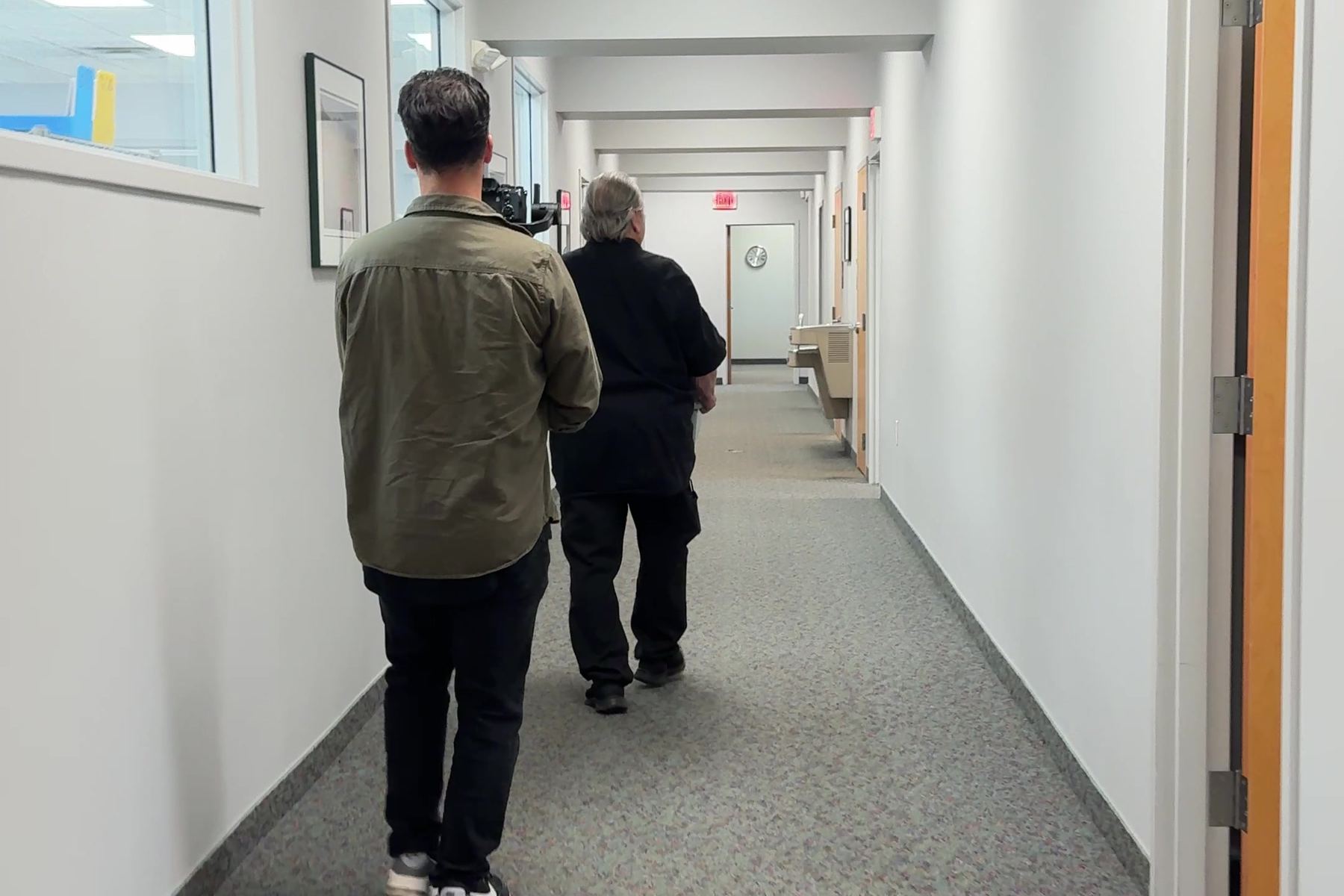
Walk the floor with them first. Mark three kinds of space. Areas where the camera can go freely, like the lobby, break room and training room. Areas where only wide shots of generic work are allowed. And areas where the camera does not go at all.
Confirm every person, in writing. Everyone who holds a camera, edits, captions or stores the footage should be confirmed as a U.S. person before they see anything. Ask your video company where the editing happens and who does it.
Clear the frame, not just the room. Screens off or turned away. Drawings, travelers, whiteboards, part numbers and labels out of view. On our healthcare and lab shoots, screens and paperwork get checked before we roll, and the same habit works here.
Treat aerial shots as their own approval. On Shield Security Doors' breaching test we ran two cameras plus drones. At a defense site, a drone over the roof or the test cells needs its own sign off.
Decide where the footage lives. Raw files stay on drives in your building or in storage your export team approved. ITAR has a specific rule for encrypted storage in 120.54, and your empowered official will know whether your setup meets it.
Review the cut, not the script. The empowered official watches the rough cut frame by frame before anything is published. Nothing goes out without your approval.
What you can still show
More than people expect. Faces, hands, a machinist reading a print the viewer cannot see, a first year apprentice explaining why she stayed. People and culture are rarely technical data. Process details often are.
Shield makes residential security doors, nothing export controlled. But its film is a useful model. Everything that makes the door worth the money is inside it, and Shield skipped the cutaway diagram. Instead, local SWAT teams tried to get through three doors, and a lieutenant with twenty years of SWAT experience said they were the toughest doors he had breached. Function and outcome, from a credible person. The full story is in the Shield case study.
Interviews can happen in a conference room in your open zone, about twenty minutes each. More on whether filming will disrupt production.
The payoff is real. North Carolina has more than 400 aerospace manufacturers and about 51,000 aerospace and aviation workers, according to EDPNC, and recruits cannot tour your floor before they apply. More on our manufacturing video production.
The short version
- ITAR lists photographs as technical data, but basic marketing information on function or purpose is excluded.
- A foreign person seeing technical data is an export. Who holds the camera and who edits matters as much as the frame.
- Map the floor, confirm every person, clear screens and drawings, and keep the footage in your control.
- Film people, training and outcomes. Leave out how the part is made.
- This is not legal advice. Your empowered official signs off on the shoot and on the cut.