
The request usually lands in a communications inbox somewhere else. Columbus, Munich, Tokyo. We need footage from the North Carolina plant by the end of the quarter.
Nobody on the team has stood on that floor.
The Global Business Alliance counts 347,100 workers in North Carolina employed by international companies, and 141,200 of them work in manufacturing.
We are one of the crews you might hire, so weigh this accordingly. Most of it applies to anyone you consider.
Plant habits come before cameras
A good crew follows every site rule without being reminded. If your plant requires hard hats, safety glasses, hi vis or an escort, the crew wears and follows all of it. If an area needs gowning, those rules apply to the crew the same as everyone else, and they get sorted before shoot day.
Ask whether they bring their own safety toe boots and hearing protection, and whether they expect to sit through your site orientation. The right answers are yes and of course.
Work around the shift, not through it
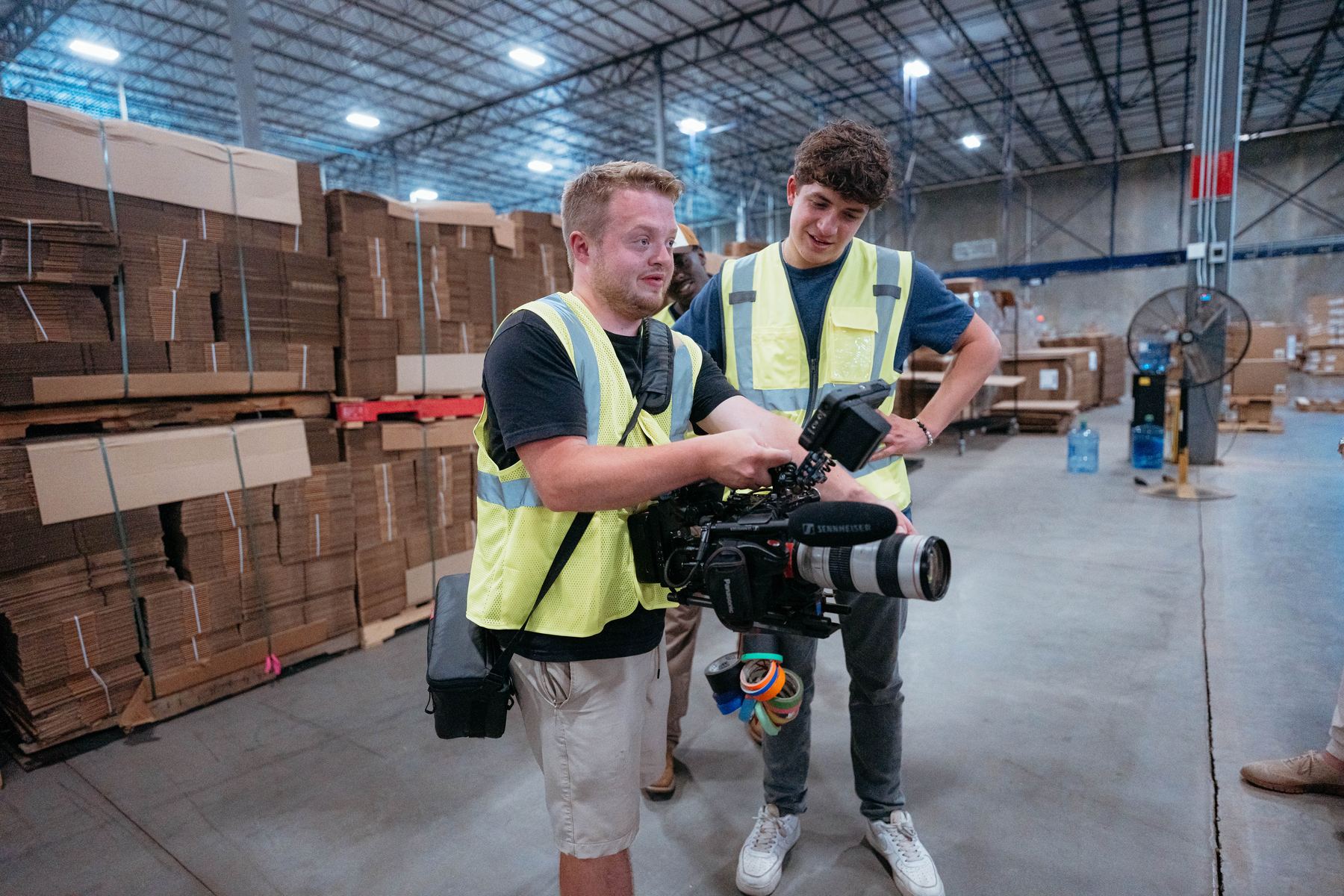
Our usual plant day looks like this. We arrive mid morning and set up the interview space while the floor keeps running. Interviews take about twenty minutes each, so five people takes under two hours. Then a few hours filming the work while it happens. Nothing staged, and no line stopped for a shot.
Plan for the people who are not on first shift. If the story is about the whole plant, someone from second or third shift belongs on camera, even if the crew has to stay late.
Releases, consent and what stays off camera
Get a written release from everyone who appears on camera, in the language they read best. Your HR or legal team should own the form, and counsel should review it.
North Carolina has no right of publicity statute, but its courts have recognized a claim for using someone's picture in an ad without consent since 1938. That case began with a 1936 Greensboro Daily News ad built around a bathing suit photo of a 19 year old singer, Nancy Flake. Written consent, matched to how you will use the footage, is still the answer.
State law requires the consent of at least one party to record a conversation, so give people nearby a heads up when a microphone is live on the floor.
Confidentiality is the bigger risk at most plants. Customer parts, drawings, whiteboards and screens end up in frame if nobody is watching for them. Our rule is that screens get checked before we roll, and nothing gets published without your approval.
If you make defense articles, raise it on the first call. Export rules can treat a clear photo of a controlled part or drawing as technical data, and where that line falls is your export control officer's call. A good crew asks for a map of controlled areas before shoot day and expects the edit to go through review.
Specs that match the brand
Send the crew your brand guide and a finished video you like before the shoot, then agree on the details.
Frame rate and flicker. North America runs on 60 Hz power, while Europe and most of Asia run on 50 Hz, as the camera maker RED explains, so plant lights here pulse 120 times a second. If headquarters edits at 25 frames per second, say so, and the crew can set a shutter speed that keeps your lights from flickering on screen.
Versions and captions. Agree on resolution, horizontal and vertical versions, captions and lower thirds. For Kingston Vybes, we cut the same event horizontal and vertical so it could run everywhere.
Raw footage. Settle whether you get the raw footage before anyone rolls, especially if your own editors will cut it again.
Do the travel math honestly
Flying your own team in is sometimes the right call. If this plant is one stop on a tour of several sites, one crew's consistency can be worth it.
For one plant, add it up. A crew of three flying in usually spends a travel day on each end. Each person needs a hotel and meals for every night, which the GSA's federal per diem rates for Greensboro are a fair yardstick for. Then add checked gear and a rental big enough to hold it.
We travel too. We have filmed in Connecticut, Cleveland and Atlanta, and we shot the KPI Solutions film at LT Apparel in Dayton, New Jersey, in one day on location. Travel works. It just costs days a local crew does not spend.
A local crew can also walk the floor before shoot day and come back when the new line starts. Here is what a shoot day looks like on a plant floor, and more on video production in the Piedmont Triad.
The short version
- Hire for plant habits first: PPE, escorts, gowning and orientation, without reminders.
- Film around the shifts, and put someone from second or third shift on camera.
- Get written releases, check every screen, and let your export control officer draw the ITAR line.
- Agree on frame rate, versions and raw footage before the shoot.
- Compare travel days, per diem and gear against a local crew.