
A painter we work with spent years on high end homes. The work was good, the clients were happy, and he wanted commercial.
Nobody hands you a warehouse because you did a beautiful living room. Every trade that tries this move runs into the same wall. You need proof you can handle the scale, and you cannot get the proof until somebody gives you a shot.
That wall is real. But most of what changes on the way over has nothing to do with the work itself.
The buyer is different
A homeowner hires you. On commercial work, a project manager, an estimator, or a facilities director does. They are not spending their own money, and they are not judging your craftsmanship first. They are judging risk.
Whether you show up when the schedule says. Whether your paperwork is right the first time. Whether your crew can work around four other trades without anybody having to make a phone call about it.
A homeowner remembers how the room looks. A project manager remembers whether you made his week harder.
The paperwork is part of the job
Before you price anything, expect a stack of requirements that never came up on a house.
Insurance. Certificates with higher limits than most residential policies carry, with the GC named as additional insured.
Safety. Your EMR, the experience modifier on your workers comp, is often a gate. 1.0 is the industry average, and plenty of GCs will not look at a sub above it.
Prequalification. On public jobs in North Carolina run by a construction manager at risk, first tier subcontractors are prequalified with a scoring tool and a minimum score set for that project.
Submittals. Commercial jobs run on specifications. On a painting job that is Section 09 91 00, and it tells you which products, how many coats, and what you have to submit for approval before you open a can.
Pay applications. Instead of an invoice when you finish, you bill monthly against a schedule of values, often on the AIA subcontractor forms, with retainage held back until the end.
Licensing. In North Carolina, anyone bidding or managing construction work of $40,000 or more needs a license from the state general contractor board. Find out where your trade and your job sizes fall before you bid, not after you win.
None of this is hard. It is just new, and a GC can tell from one email whether you have done it before.
Cash flow changes too
On a house you are usually paid soon after you finish. On a commercial job you may wait a month or two for a pay application to clear, and the retainage comes at the very end.
Plan for that gap before you take the first job. The cash flow on a first commercial job catches more trades off guard than the work does.
How the first job actually happens
Usually it is not a cold bid. It is somebody who already knows you. A homeowner who runs a plant, a GC who saw your work on a friend's house, a property manager who needs one building done fast.
JD Paint Pros landed theirs that way. EcoFiber, a manufacturer in Colfax, needed a 50,000 square foot former machine shop primed and painted, ceiling deck, walls and brick, while the building was still full of equipment that had to be moved section by section. Twelve days.
That job is the one most trades waste.
Make the first job count
Here is what usually happens. The first commercial job goes well, the crew moves on, and two months later the owner is back to saying we do commercial too, with nothing to show for it but a line on a project list.
The first job is the proof you could not get before. It only works as proof if somebody other than you can see it.
That is why the owner of JD Paint Pros called us. Not to get the EcoFiber job. To make sure it was not the last one.
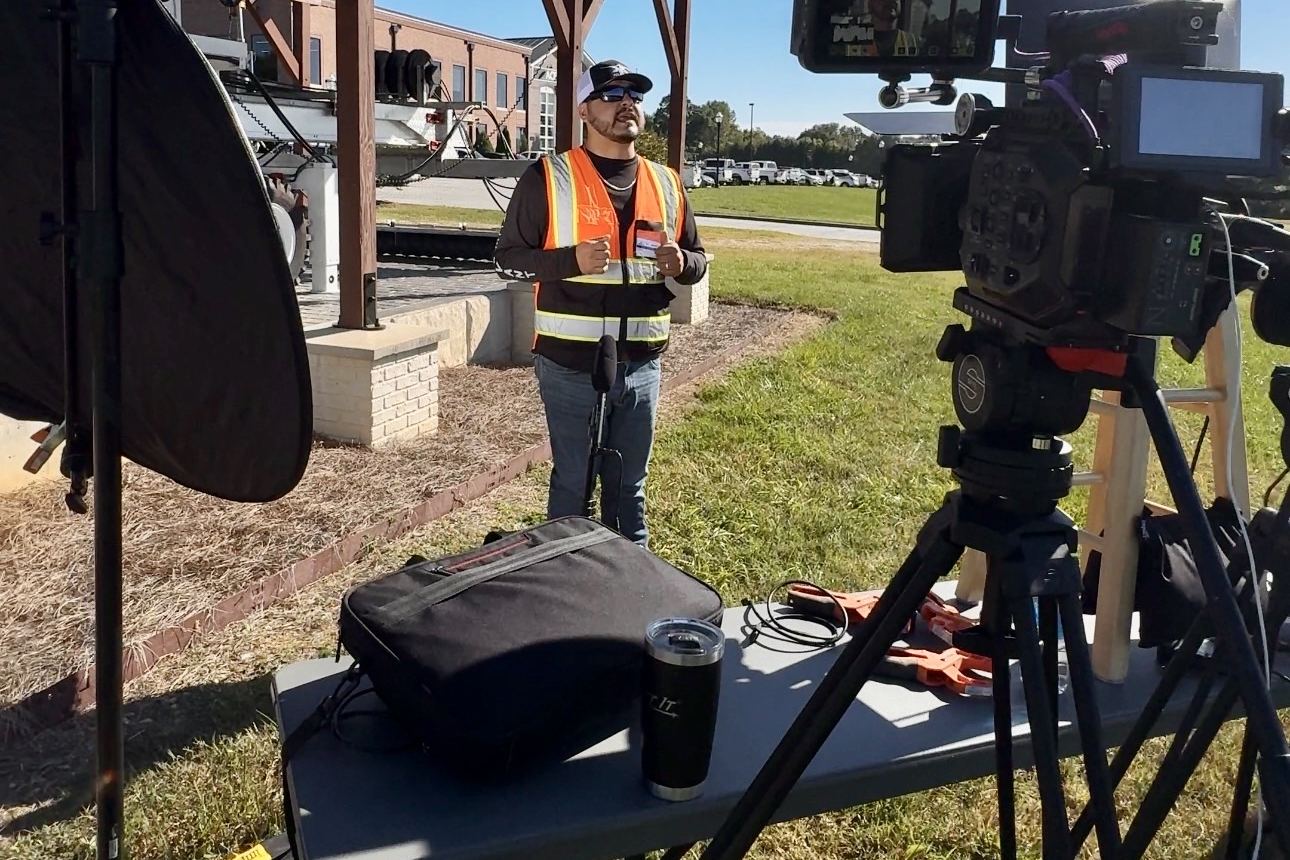
We filmed two days of the twelve. On day three we sat down with the person at EcoFiber who made the decision and asked why he picked JD Paint Pros over the other quotes. He did not talk about the paint job. He talked about the quote.
"I was impressed with the details of the quote. I didn't have to come back and question him about it because he was very specific on the paints he was going to use."
That is the sentence a commercial buyer needs to hear, because it answers the risk question, not the craftsmanship question.
Then we filmed the crew at full scale, sprayers, lifts and ceilings. On day ten we sat down with the owner as the job wrapped up. The finished piece runs under two minutes, and he sends it to nearly everyone who reaches out about a building.
What to capture on yours
You do not need a film crew to start. You need to decide before the job starts what proof you want to walk away with.
Ask the person who hired you why they picked you. On camera if you can, in writing if you cannot. The answer is almost never about the work itself.
Get the scale on record. Wide shots, the lifts, the square footage, the number of days.
Show the paperwork side. The submittal approved, the schedule held, the punch list closed.
Put a face on it. The foreman, the owner, the crew. A GC is deciding who will be on their site.
Then use it everywhere a GC looks. The email to an estimator, the prequalification package, the walk through. More on how subcontractors get on a GC's invite list.
The short version
- Commercial work is a different buyer, not a bigger house. They are judging risk, not craftsmanship.
- Expect insurance certificates, an EMR check, submittals, monthly pay applications and retainage.
- Check North Carolina's $40,000 licensing threshold before you bid, and plan for slower cash on the first job.
- The first commercial job is the proof you could not get before. Capture it while it is happening.
- Ask the client why they picked you. The answer is your best sales line.