
Somebody running a distribution center is about to sign for a system they have never seen run in their own building.
Companies in Modern Materials Handling's 2025 automation study expected to spend $1.5 million on materials handling that year, on average. More than half of them still handle order fulfillment mostly or entirely by hand.
So the person signing is often doing this for the first time. Everything they know about your system, they learned from a quote, a site visit, and whatever you sent them.
The case study is the closest they get to watching it work.
They are not buying robots
They are buying the next five years of their building.
Ask an operations director what worries them about an automation project and the answers are rarely about the technology. Will it stay up during peak. What happens to shipping while you install it. Who on my floor runs it. Who do I call when something stops.
The same study backs that up. 93 percent of respondents rated durability, reliability and uptime as very important when choosing equipment. 83 percent rated support and service response time as important.
Most case studies answer a different question. They explain how the system works. The buyer wants to know whether it worked, for someone like them.
What they need to see
We filmed a day inside LT Apparel's distribution center in Dayton, New Jersey for KPI Solutions, the integrator that redesigned it. Here is what a buyer needs, and where it showed up in that film.
The before, in the customer's words. LT Apparel ran a small distribution center for about thirty years. Labels were printed and applied by hand, and every volume spike was a scramble. A buyer recognizes their own building in that, which is the point.
The goal, then the number. They needed to support at least 125,000 units a day at peak. After the project they were picking 150,000 a day, up from 30,000. Put the target next to the result so nobody has to do the math.
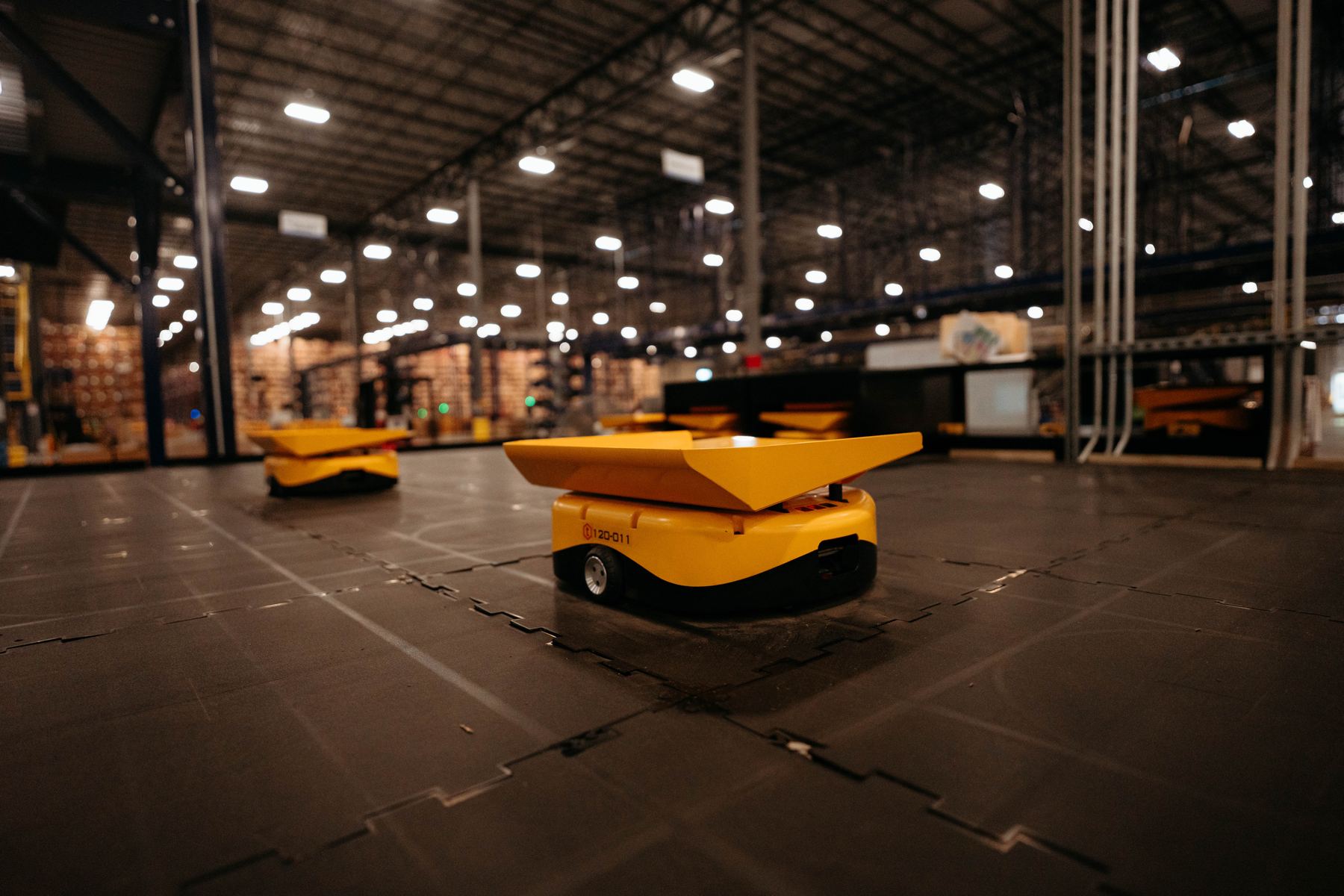
The system running at real speed. Red AutoStore robots working the grid, yellow sort robots crossing the floor. AutoStore says it has more than 1,950 systems in over 65 countries, so your buyer has probably seen a rendering. Watching one run in a building like theirs is different.
The numbers a CFO repeats. Units per labor hour more than tripled in a year. Chargebacks fell about 80 percent. Those are the lines that get said again in a meeting you are not in.
The people. The operators who use it every day and the client who signed for it, saying what changed. Not the integrator's engineers explaining their own design.
Say it so the CFO follows
Gartner found B2B buyers spend about 17 percent of their buying time meeting with potential suppliers. That is all of the suppliers combined. Most of the decision happens in rooms you are not in, with people who do not speak automation.
KPI had made plenty of case study videos before. Every one ended up full of industry language. It made sense to people already in warehouse automation and lost everyone else, including the people most likely to refer them.
So we changed the questions. Instead of asking how the system works, we asked how you would explain it to a fifth grader, or to somebody at a barbecue. What came out was a conversation, not a presentation. More on why your buyer can't follow what you do.
The finished film runs a little over three minutes and has no jargon in it. Someone who has been in automation twenty years and someone who started last week both come away knowing what KPI did and why it mattered.
Payback is the question under every other question
L.E.K. Consulting's 2026 look at US warehouse automation found more than 80 percent of operators report payback periods under two years. Your buyer has read numbers like that. What they want is proof it happened somewhere they could call.
That is why the client's voice matters more than yours. When the person who signed says what changed, a buyer hears a reference, not a pitch.
Where the film earns its keep
KPI played it on repeat at their national trade show booth, and people asked to see it again on the spot. Then they sent it to their email list, roughly 35,000 contacts.
It keeps working after the show because it travels. Your champion forwards it to the CFO, the CFO forwards it to the owner, and the story arrives intact. We have done three projects with KPI now. The full story is in the KPI Solutions case study.
The short version
- A warehouse automation buyer is signing for something they have never seen run in their own building.
- They care about uptime, service and disruption more than how the system works. 93 percent rated uptime very important.
- Show the before, the goal next to the result, the system at real speed, the numbers a CFO repeats, and the client saying what changed.
- Cut the jargon. Most of the decision happens without you in the room.