
Most EHS managers have a binder of sign in sheets proving everyone was trained. Many have also seen someone get hurt doing the exact thing the training covered.
Private industry employers reported 2.5 million nonfatal workplace injuries and illnesses in 2024, according to the Bureau of Labor Statistics, a rate of 2.3 for every 100 full time equivalent workers. In North Carolina it was 64,200 cases. The state's manufacturing rate was 2.2, down from 2.4 the year before.
The numbers are moving the right way. The harder question is how much of that is training, and the research answer is less tidy than most of us would like.
What training does and does not do
In 2012, researchers working with NIOSH and the Institute for Work & Health in Ontario reviewed 22 randomized trials of occupational safety training. They found strong evidence that training changes how workers behave on the job. They found insufficient evidence that it reduces injuries, illnesses or symptoms.
NIOSH's own summary of its review with the Institute said effective prevention also takes management commitment and worker involvement in a broader program for finding and controlling hazards. Training is necessary. It is not enough by itself.
That is the honest starting point. Here is why the training part so often fades.
It was built for the file
A sign in sheet proves attendance. It does not prove anyone understood.
OSHA spelled this out in an April 28, 2010 policy memo. Employers have to instruct employees using a language and vocabulary they can understand, and if someone's vocabulary is limited, the training has to account for that.
Ask them to show you. A worker who can walk through the lockout on the actual machine, in their own words, has learned it. A worker who signed a sheet may not have.
It asks people to sit still
In 2006, Michael Burke and colleagues published a review of 95 safety training studies covering 20,991 workers, from 1971 to 2003, in the American Journal of Public Health. They sorted training by how engaging it was.
Lectures, films and video based training sat in the least engaging group. Behavioral modeling and hands on practice sat in the most engaging. As training got more engaging, knowledge gains went up, and so did reductions in accidents, injuries and illnesses.
We make video, so here it is plainly. A video watched alone at a kiosk sits in the least engaging group in that review. Video earns its place in the modeling part, showing the right way done by someone like the viewer. The practice and the conversation still have to happen in person.
One fair caveat. That NIOSH summary also says its review could not confirm that a single session of hands on training changes behavior more than a lower engagement session. The effects were too small to tell. Where engagement clearly mattered was the next finding.
The hazard never feels real
In 2011, Burke's team looked at 113 studies with 24,694 workers in 16 countries. Where hazards were most severe, engaging training was considerably more effective. Where risk was low, less engaging training did about as well.
Burke called it the dread factor. Practice and dialogue bring home the realization that you could actually get hurt, and that realization is what pushes people to learn how to avoid it.
That gives you a practical split. A short video is fine for lower risk topics, like housekeeping or where supplies are kept. For energy control, machine guarding and forklifts, spend the time on practice and talk, and use video to make the danger real.
Put someone credible on camera
Making it real does not mean gore. It means someone credible showing or describing what happens.
For The Flame Detector, a company founded by people with firefighting backgrounds, we built a fire room with six common smoke alarms mounted next to their unit and ran five different fires. Some of the six never went off. Nobody had to say that alarms fail. You watch it happen.
The founder interview did the rest. A founder with a firefighting background, explaining what he wishes had been different when he pulled up to a house. That was a product film, not safety training, but it works on the same thing Burke describes.
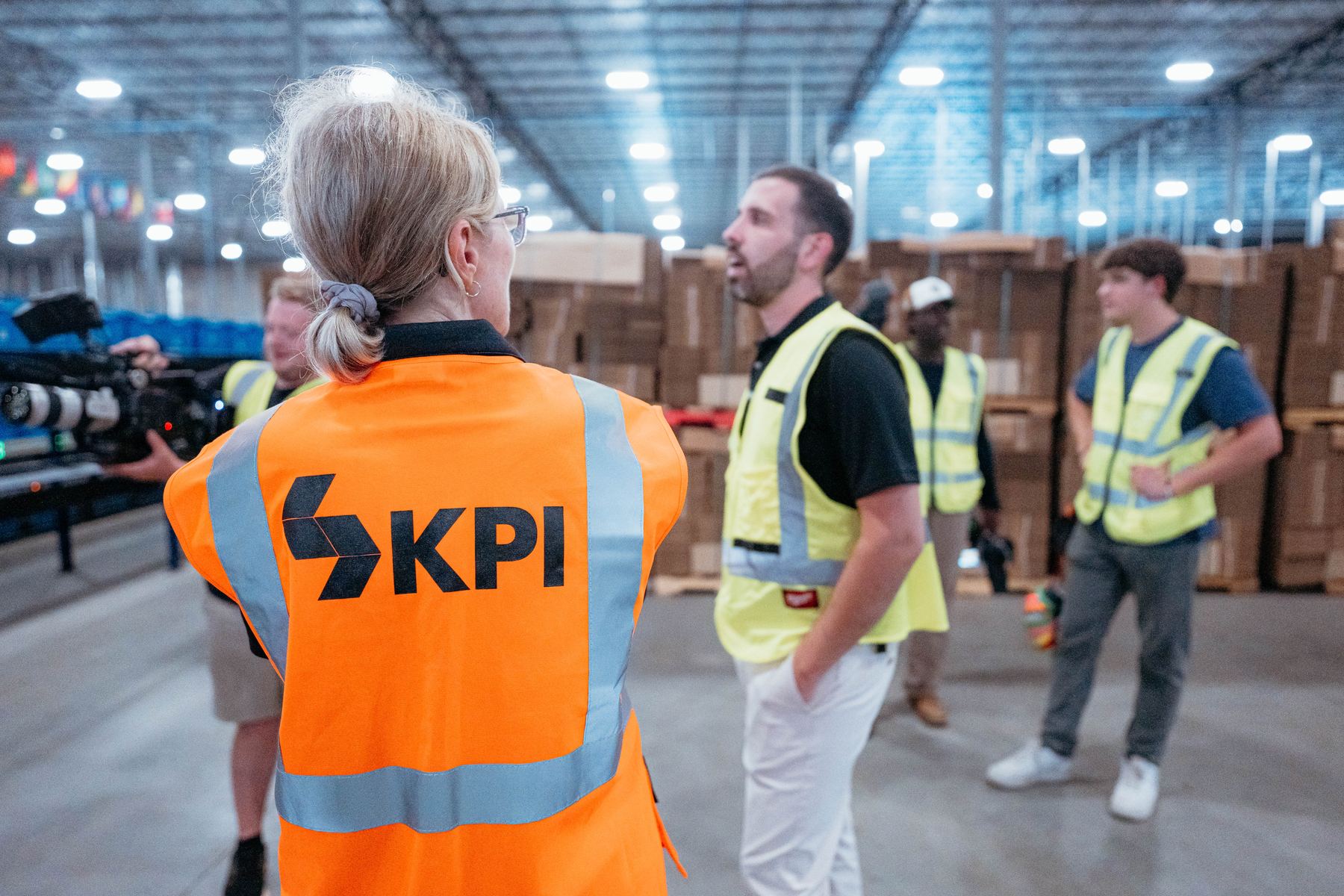
On the floor, that person is your own operator, not an actor, because a machinist can tell when somebody is holding a tool wrong. The crew filming follows every site rule too: hard hats, safety glasses, hi vis, escort. A safety video shot by people ignoring safety rules undercuts itself. More on how we film safety training on site, and on who should be on camera.
The short version
- Training reliably changes behavior. On its own, it has not been shown to cut injuries.
- Prove understanding with a demonstration on the real equipment, not a signature.
- Passive training, video included, is the least engaging kind. Pair it with practice and conversation.
- Spend the hands on time where the hazard is worst, and put someone who has seen the consequence on camera.