
New aseptic operators have to prove they can gown before they work in the aseptic area.
When someone fails, it is rarely for lack of effort. A glove brushes the outside of the coverall. A hood goes on a step out of order. The plates come back, and a hire you needed on the floor next week is back in the gowning room.
North Carolina is teaching a lot of people to gown at once. Eli Lilly's Concord site began commercial production at the end of 2024 and had more than 750 employees by June 2025. Not all of them gown in. The ones who do have to qualify first.
What FDA asks for
FDA's 2004 aseptic processing guidance says "appropriate training should be conducted before an individual is permitted to enter the aseptic manufacturing area."
It describes a gowning qualification that tests whether an operator can keep the gown clean through the gowning procedure. That includes microbiological sampling of several spots on the gown, such as glove fingers, facemask, forearm and chest, and periodic requalification after that.
The CGMP rule at 21 CFR 211.25(a) gives the plain version. People need training in "the particular operations that the employee performs" and in CGMP, on a continuing basis.
Why the gown carries so much weight
In a 2007 study, W. Whyte and M. Hejab measured what 55 people put into the air. In their own indoor clothes they dispersed an average of 2,400 microbe carrying particles a minute. In cleanroom garments, 177.
That difference only holds if the gown goes on clean. Every step in your sequence exists to keep the outside of the garment away from anything it should not touch, starting with the person wearing it.
Practice beats watching
Some of the clearest research on this comes from hospitals, not cleanrooms, so treat it as a close cousin.
In a 2015 study in JAMA Internal Medicine, Tomas and colleagues used fluorescent lotion to show where contamination landed when health care workers took off gloves and gowns. Skin or clothing was contaminated in 200 of 435 simulations, or 46.0 percent.
One hospital then tried education plus hands on practice, with immediate visual feedback from the lotion. Contamination there fell from 60.0 percent to 18.9 percent right after, and sat at 12.0 percent one and three months later.
Taking a gown off is not putting one on, and a hospital ward is not a grade A suite. But the lesson travels. People improved when they practiced and could see their own mistakes. That is also the honest limit of a training video. It sets up the practice. It does not replace it.
How to film gowning so it sticks
Film your own gowning room. New hires should see the bench, the mirror, the bins and the floor markings they will actually use. That is why we film training in the client's own space, so new hires recognize where they are.
Use a qualified operator, not an actor. Someone who gowns every day moves the way your SOP intends, and anyone who works in that room can tell when somebody is faking it.
Shoot the hands close. A lot of misses come down to where a glove touched. Film the hands tight, from the point of view of the person gowning, so a new hire sees it the way they will do it.
One step, one short clip. Each step in your sequence gets its own piece. When the SOP changes one step, you replace one clip instead of reshooting everything.
Show the usual misses. Have your trainer name the errors that fail people most often at your site, and film each one next to the right way.
Then practice with feedback. Watch the clip, gown with a trainer watching, and see the result. If your training uses plates or a fluorescent check, show new hires what a failure looks like before their first try.
Where the clips live
Tie each clip to the SOP number and revision in your training system, and update it the day the SOP changes. A new hire watches the night before, again right before the first attempt, and again before requalification.
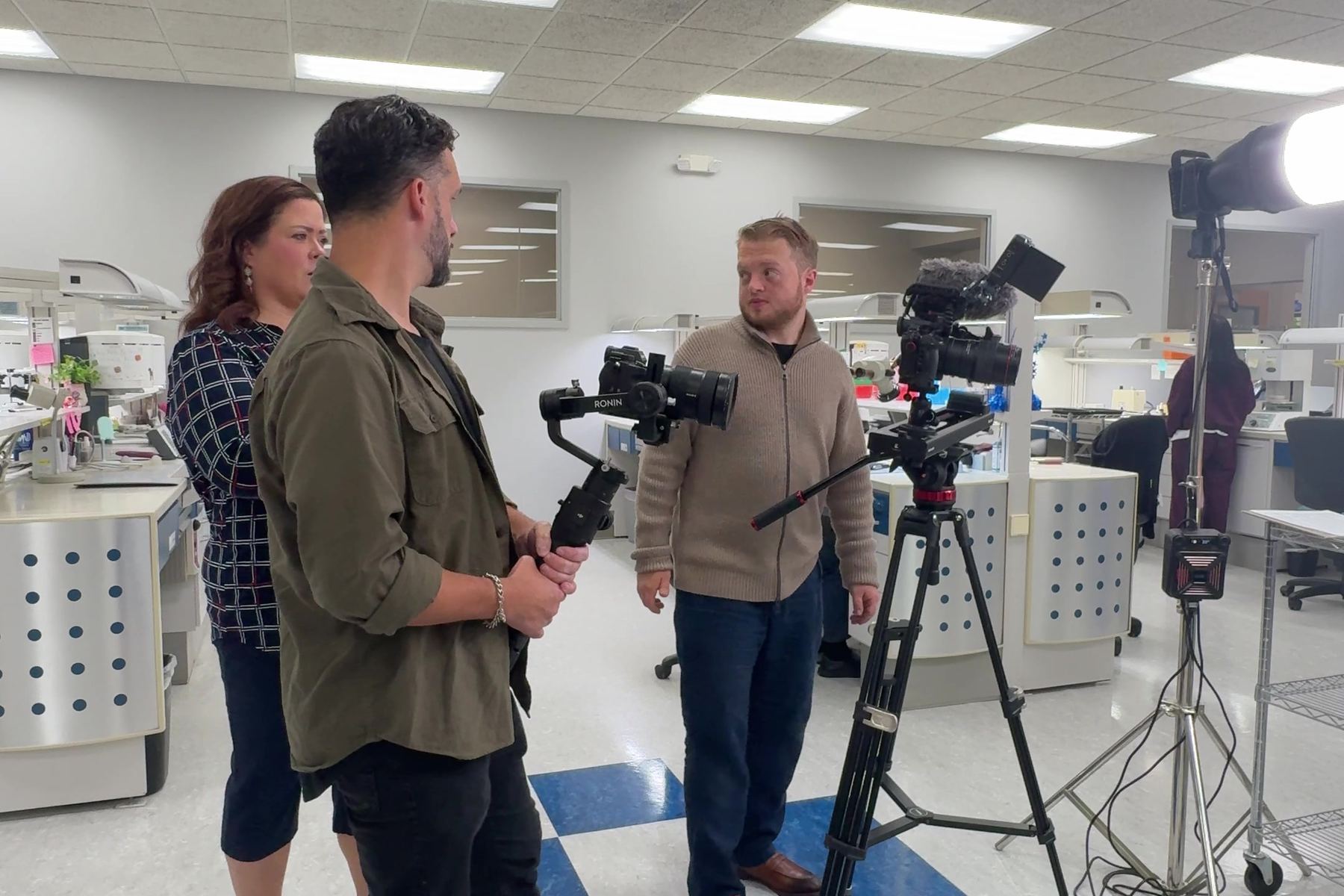
We filmed Apex Dental Laboratory Group, a dental lab, in one shoot day with two cameras and no script. A gowning series is smaller than that. One room, one qualified operator and your trainer, filmed under your gowning and QA rules. More on our medical and dental lab video.
The same rules shape our safety training video for plants and job sites: real people, the real space, and hands filmed close.
The short version
- Gowning qualification turns on small physical slips, like where a glove touched.
- FDA expects training before anyone enters the aseptic area, sampling of the gown, and periodic requalification.
- In one study, cleanroom garments cut dispersal from 2,400 microbe carrying particles a minute to 177. Only a gown that goes on clean does that.
- Film your own gowning room with a qualified operator, hands close, one step per clip.
- Video sets up the practice. Practice with feedback is what changed behavior in the research.