
Your customer sees the part that passed. They never see the ones that did not.
That is why quality is so hard to market. The work that protects a buyer happens in a room they will never visit, done by people whose names they will never learn.
A quality control process video brings that room to them. Here is what it should show, and what it should not pretend.
Show the system, not a hero
The easy shot is one inspector squinting at a part under a lamp. It looks serious. It also tells the wrong story.
In a 2015 study in the journal Human Factors, Judi See of Sandia National Laboratories had 82 inspectors examine 140 precision parts used in nuclear weapons, looking for eight kinds of defects. They correctly rejected 85 percent of the defective parts. They also rejected 35 percent of the good ones. The paper put the industry average for catching defects at 80 percent.
Those are trained people checking some of the most demanding parts in the country. Human inspection is good. It is not perfect, and every quality manager already knows that.
So an honest video does not claim one person catches everything. It shows the layers. The first piece check. The gauge at the station. Final inspection. The record that ties a part back to its lot. A buyer who sees layers trusts the system more than a buyer who is told nothing ever slips through.
What to film
Start with the moment somebody decides a part is not good enough. Everything else supports that.
The reject decision. Have the person who makes the call explain what they look for, and what made them pull a part recently. That moment is the strongest argument you have for your quality. More on marketing a product nobody ever sees.
Where the rejected part goes. Follow it. The red tag, the hold area, the review, the fix upstream. Buyers want to see that a bad part cannot wander back into a shipment.
The measurement, close up. Hands on the gauge, the reading on the screen, the tolerance it has to hit. Close shots carry precision better than wide ones.
The record. The traveler, the lot number, the inspection log. Shown briefly, with anything confidential kept out of frame.
The person who explains why. One sentence from an inspector about why a defect matters to the customer is worth more than a minute of narration.
If your product can be proven under stress, that is a different film, and often a stronger one. Here is how we think about product testing video.
Inside a dental lab
We spent a day inside Apex Dental Laboratory Group, a lab that makes dentures and mouth guards. A dentist sees a denture that fits. The precision that made it fit happens at a bench the dentist never sees.
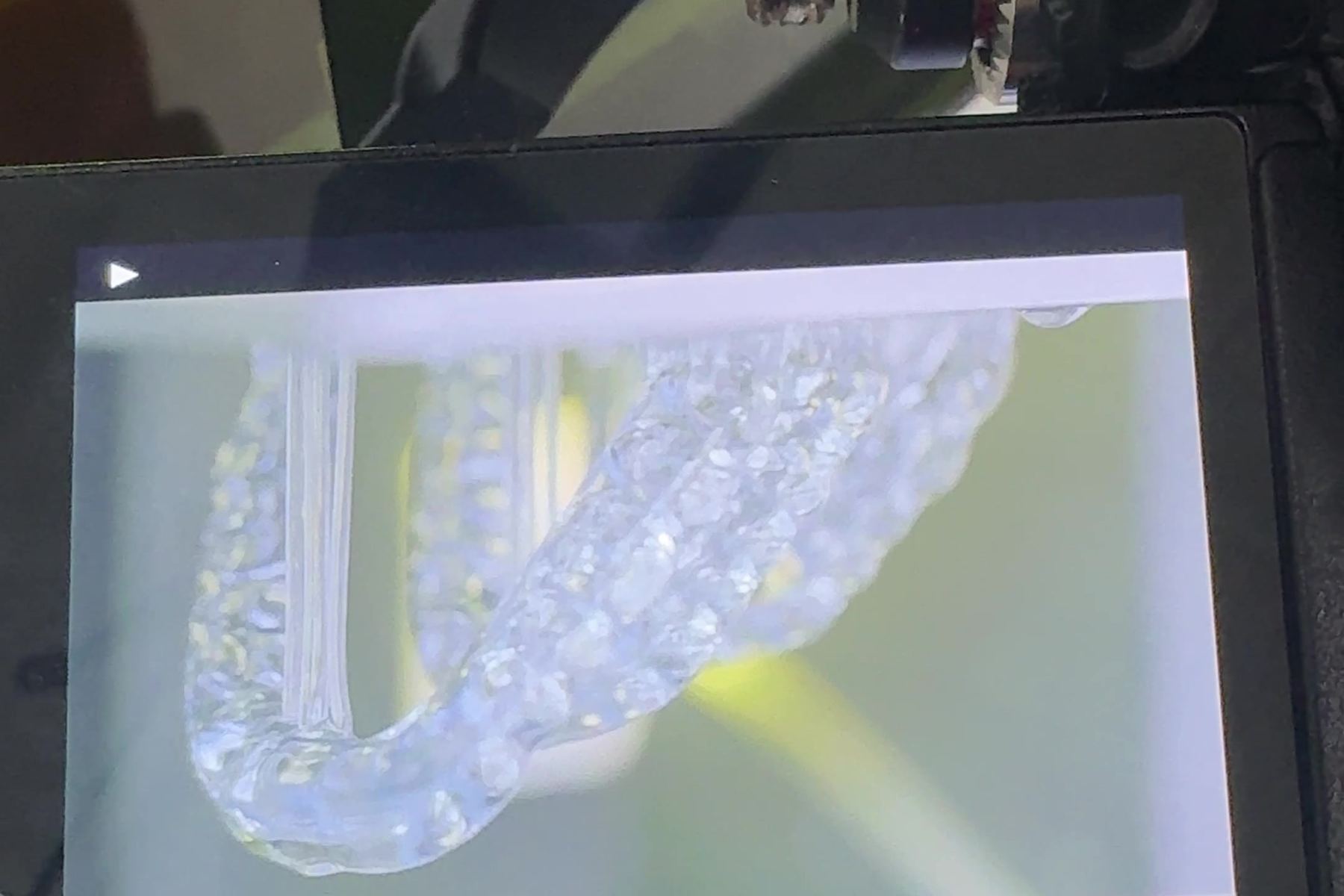
We filmed technicians at their benches, a technician at his CAD screen, and a 3D printer laying down a mouth guard behind an amber window. One shoot day, two cameras, no script. Interviews ran about twenty minutes each in the conference room while the lab kept working.
In a lab, the rules around the camera matter as much as the camera. Gowning and lab rules apply to us the same as everyone else, and they get sorted before shoot day. No patient information goes on camera, screens get checked before we roll, and nothing is published without the client's approval. The same discipline works in any plant with customer drawings on a screen. More on how we film for dental labs and healthcare manufacturers.
If you answer to the FDA
For medical device makers, this year changed the backdrop. FDA's Quality Management System Regulation took effect on February 2, 2026, and it incorporates ISO 13485:2016 by reference. The same day, FDA stopped using its old inspection approach, known as QSIT, for device inspections.
A film will never count as evidence in an inspection, and it should not try to. What it can do is show customers, distributors and new hires the same discipline an investigator sees. Keep every claim consistent with your written procedures, and have quality sign off on the final cut.
Regulated or not, the places it earns its keep are the same. A quote package. The packet a customer gets before their supplier audit. Day one for a new inspector.
The short version
- Buyers never see the parts you reject. Show them.
- In a 2015 Sandia study, trained inspectors caught 85 percent of defective parts. Show the layers, not one hero.
- Film the reject decision, where the bad part goes, the measurement up close, the record, and someone explaining why.
- In a lab, sort out gowning, screens and patient privacy before shoot day.
- Video supports your quality system. It never replaces the record.