
A dentist sends an order to a lab. The denture comes back in a box, and it fits or it does not.
The dentist never stood at the bench. Never watched the scan become a design, or the design become something you can hold.
That is the position of almost every custom manufacturer. Your buyer sees the result. The work that made it good happens somewhere they will never go.
Dental labs are a clean example. In May 2023, the Bureau of Labor Statistics counted 34,190 dental laboratory technicians, and 29,080 of them worked in medical equipment and supplies manufacturing. A dental lab is a factory. Most of its customers do not think of it that way.
What buyers do when they cannot see the work
They guess, and then they compare what they can see. Price. Turnaround. Whether the last order was right.
So the care that makes you better never enters the decision.
Explaining it is not a courtesy. It is the part of the sale that never happens unless you make it happen.
Film the steps a buyer would worry about
You do not need every step. You need the few where a buyer's doubt lives.
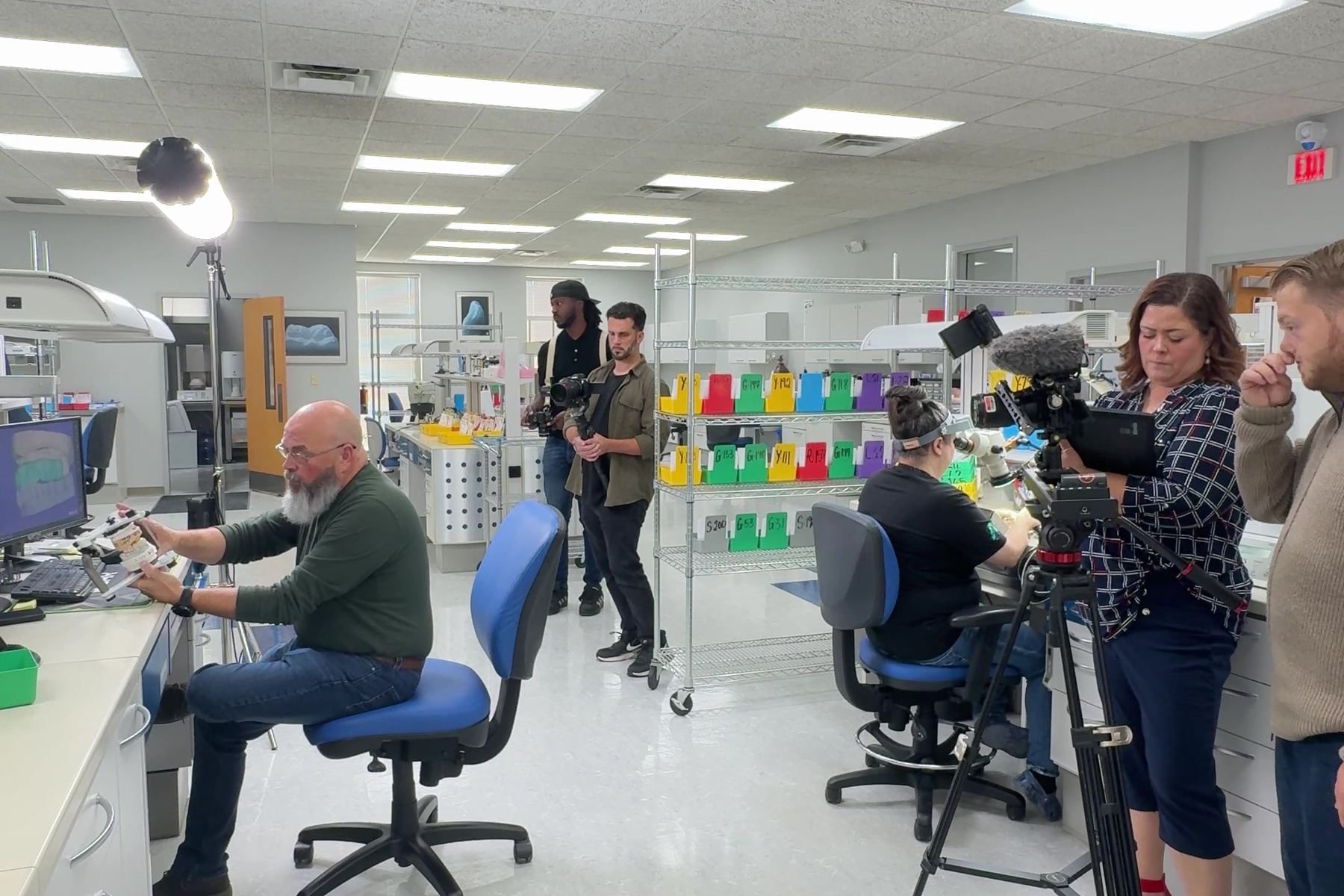
The step that takes judgment. Somewhere a person decides something a machine cannot. At Apex Dental Laboratory Group, a lab that makes dentures and mouth guards, we filmed a technician at his CAD screen.
The equipment they have only heard about. We filmed a 3D printer laying down a mouth guard behind an amber window. Plenty of dentists know labs print parts now. Far fewer have watched it happen.
The hands at the bench. Technicians at their benches, working the way they work every day. Precision is easier to believe when you can see the person responsible for it.
The check before it ships. Whatever inspection catches a bad part, show it. That is the step a buyer worries about most and sees least.
Show the process you run now, too. The Bureau of Labor Statistics projects dental lab technician jobs to fall 6 percent between 2025 and 2035, as 3D printing and other laborsaving technology take on more of the work. If your customers still picture how you worked a decade ago, they are judging a shop that no longer exists.
Say it in the buyer's words
The people who know a process best describe it in shop language. That works on the floor and gets lost on the customer.
Ask why instead of what. What goes wrong if you skip this step? How do you know when it is right? The answers come out in plain words, and they explain the value without anyone trying to sell it. More on why your buyer can't follow what you do.
Keep it short. In Demand Gen Report's 2024 content survey, 56 percent of buyers said they feel overwhelmed by the amount of content available. Two minutes on the steps that matter beats a twenty minute tour.
Filming while the work keeps going
At Apex we spent one shoot day with two cameras and no script. Interviews ran about twenty minutes each in the conference room, and the lab kept working the whole time.
Custom work comes with rules. Gowning, clean areas and lab procedures apply to a film crew the same as anyone else, so we sort them out before shoot day. No patient information goes on camera, screens get checked before we roll, and nothing is published without approval. The same care applies to a customer's drawings on a machine shop wall.
One honest limit. A big buyer who needs to audit you will still audit you, and video does not replace the visit. What it does is make sure the people who never visit understand what the visitors saw.
Here is how we approach medical and dental lab video, and what goes into a plant tour video.
The short version
- Custom buyers see the result, never the process, so they compare on price and turnaround.
- Film the few steps where a buyer's doubt lives, especially the check before it ships.
- Show the process you run today. Many buyers picture your shop as it was years ago.
- Ask why instead of what, and keep it to a couple of minutes.
- Sort lab rules, screens and approvals before shoot day.